One is what it costs to put up; the other is what it costs the driver it catches. UK government guidance and the research behind it also ask a third question: what does it save in crashes?
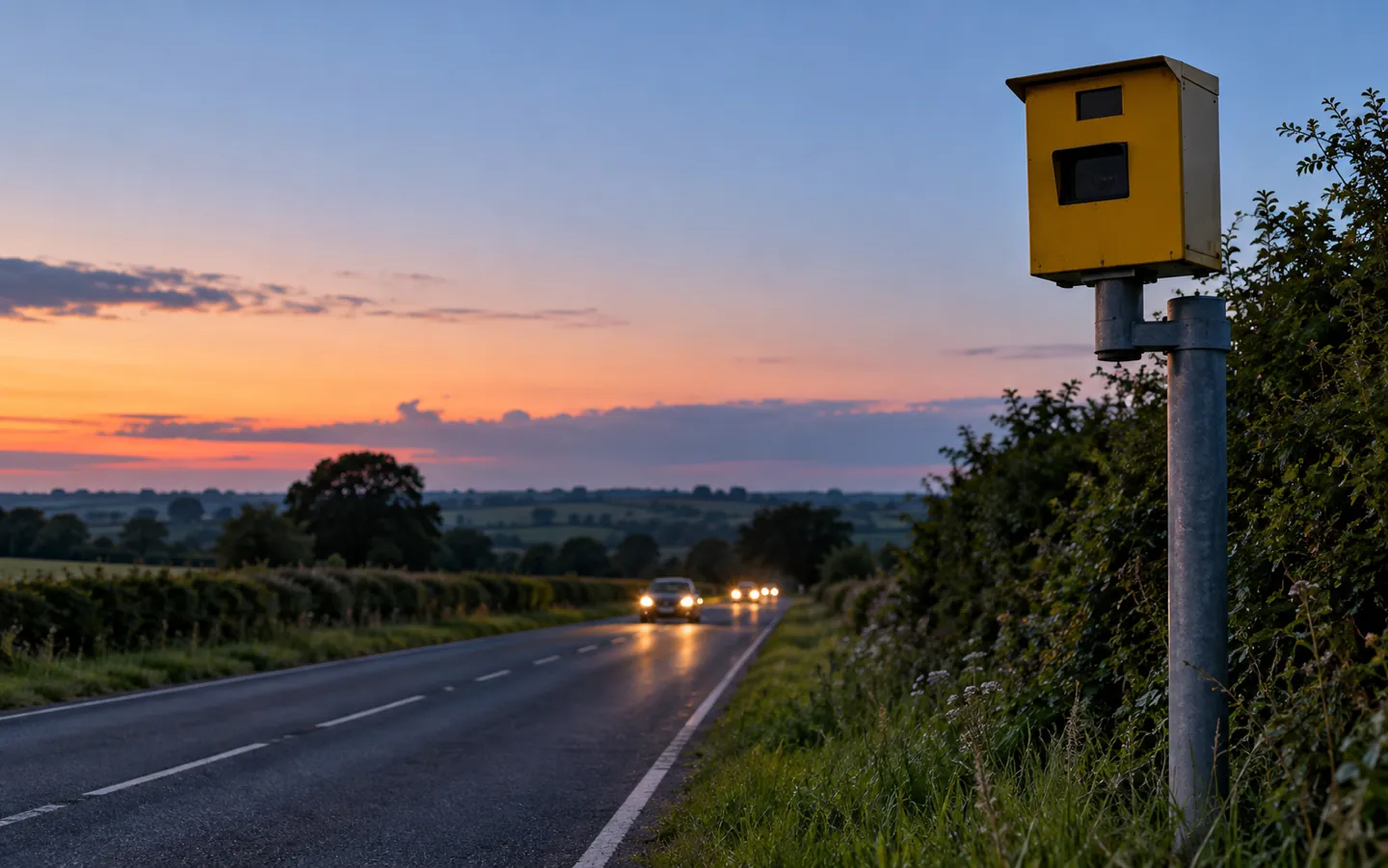
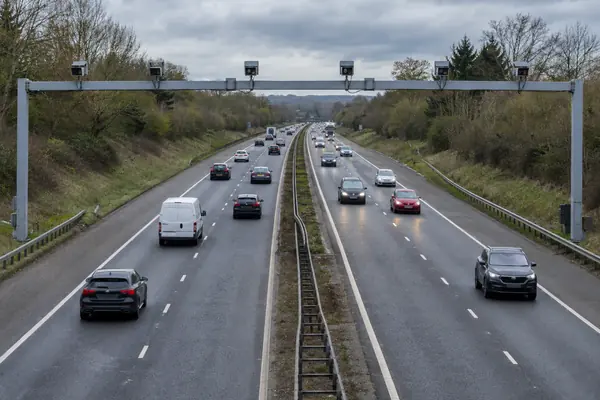
AI-generated image, not a photograph of a real person or place.
Cheaper to build
Fines go to the Treasury
Fewer serious crashes
Three costs, one camera
THE SHORT ANSWER
Cheaper to build, costly to ignore.
What a camera costs depends on who is paying. Here are the three bills, from official and research sources.
TO BUILD
From £1.5m to £100k a mile
A 2016 RAC Foundation study said permanent average speed cameras typically cost around £100,000 per mile to install, against around £1.5m per mile in the early 2000s.
GOV.UK says the minimum penalty for speeding is a £100 fine and 3 points. The fine goes into the Government's Consolidated Fund, not to the police who caught you.
General information only, not legal advice. For advice on your own situation, speak to a qualified lawyer or a free advice service.
AFTER THE FLASH
What happens after a camera?
Pick a stage to see what GOV.UK says happens when a speed camera catches a car. The bar shows how much is at stake at that stage.
Based on the GOV.UK page on speeding penalties. This is general information, not legal advice for your case.
TWO NUMBERS WORTH KNOWING
The camera got cheaper, the crashes got fewer.
One figure on what cameras do at their sites, one on what the newest kind costs to build.
42%
Fall in death and serious injury at camera sites
The Government's independent four-year evaluation of the National Safety Camera Programme, covering over 4,100 camera sites, recorded a 42 per cent fall in death and serious injury and a 22 per cent fall in injury collisions at camera sites.
CRASHES · DfT EVALUATION
≈ £100k a mile
Typical cost of permanent average speed cameras
Down from around £1.5m per mile in the early 2000s. The same study found fatal and serious collisions fell by 36 per cent after average speed cameras were introduced.
COST · RAC FOUNDATION 2016
Before-and-after figures can flatter cameras, because they are often put where crashes have just peaked. The DfT evaluation said cameras still achieved substantial reductions after allowing for this.
HOW THE RESEARCH STACKS UP
Not one study, many.
Each study counts crashes near cameras before and after they went in. They differ in size and method, but they point the same way.
The national evaluation, 2005
Over 4,100 camera sites in some 38 partnership areas: death and serious injury down 42 per cent at camera sites.
The Cochrane review
35 studies from a range of countries. Near camera sites, crashes causing death or serious injury fell by between 11 and 44 per cent.
The RAC Foundation, 2013
551 fixed cameras: fatal and serious collisions down 27 per cent on average, though 21 cameras saw rises worth investigating.
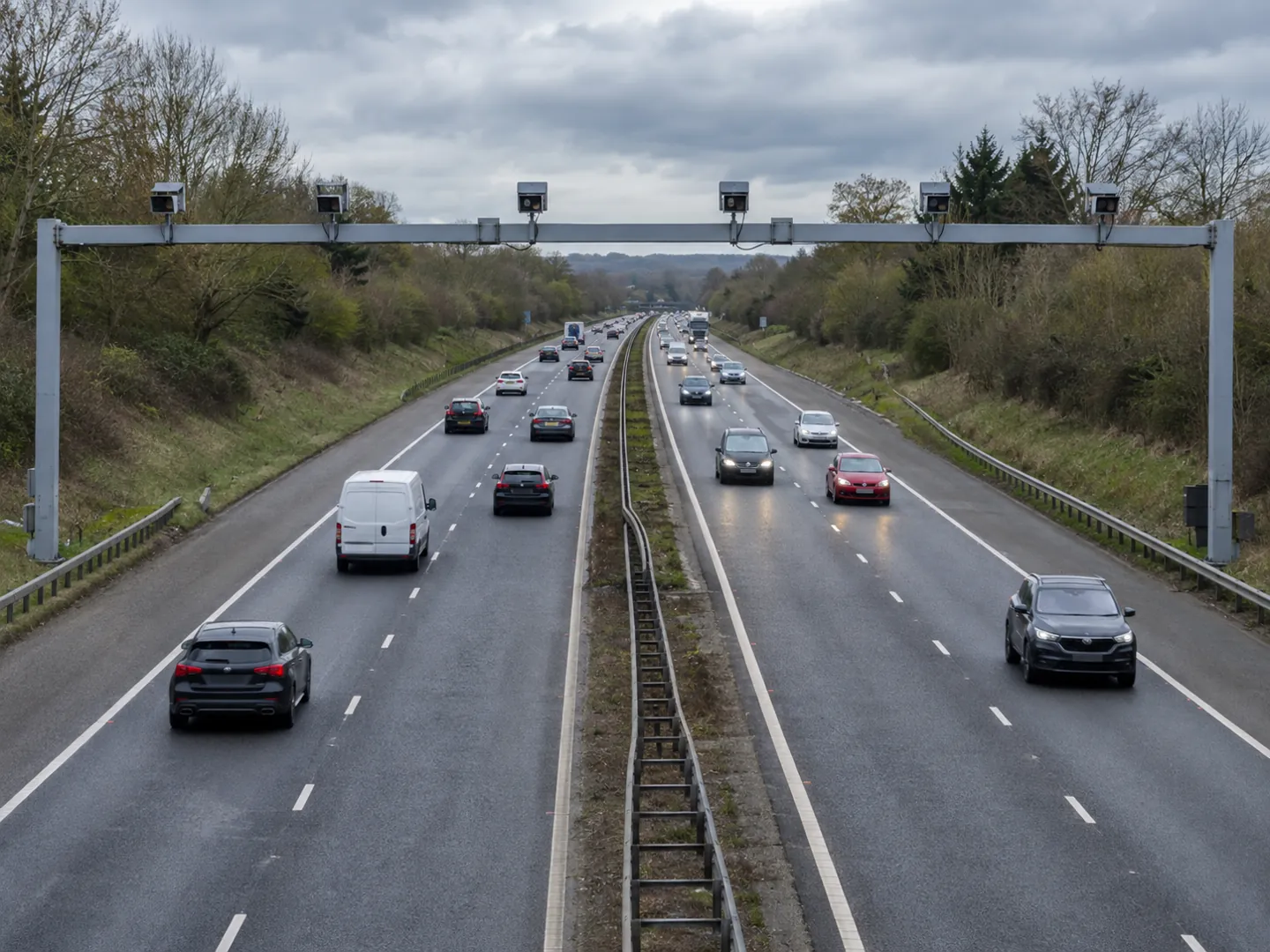
Average speed cameras, 2016
After allowing for trends, fatal and serious collisions fell by 36 per cent and injury collisions of all kinds by 16 per cent.
AI-generated image, not a photograph of a real person or place.AI-generated image, not a photograph of a real person or place.
WHY THEY ARE YELLOW
Seen, signed and on purpose.
Department for Transport guidance from 2007 says fixed speed camera housings should be coloured yellow, front and back, and that cameras, or the van or officer using one, should be visible from 60 metres where the limit is 40 mph or less and 100 metres elsewhere.
The aim is to change behaviour where speeding is a known problem. The same guidance is clear that a camera missing its paint or sign is not a defence to a speeding offence, and that police can still enforce covertly.
Questions
Questions people ask
Do speed cameras actually reduce crashes?
The evidence points that way. A Cochrane review found 28 studies that measured crashes, and all 28 recorded fewer crashes near camera sites afterwards. Its authors rated the studies as moderate quality at best and asked for better-designed ones.
How much is a speeding fine?
GOV.UK says the minimum is a £100 fine and 3 penalty points. If you go to court and are found guilty, the fine is usually a percentage of weekly income, up to £1,000, or £2,500 on a motorway.
Where does the money from speeding fines go?
Into the Government's Consolidated Fund, which pays for public services generally. The Department for Transport has said this avoids creating an incentive to enforce for the sake of raising money.
Why are speed cameras painted yellow?
Department for Transport guidance asks for fixed camera housings to be coloured yellow so that drivers can see where enforcement happens. The guidance also says that not meeting it is no defence to an offence.
What is regression to the mean?
Cameras often go where crashes have just been unusually high, and unusually high years tend to be followed by more ordinary ones. That makes simple before-and-after counts look better than they are, so careful studies try to allow for it.